
An objective review
Atomic Habits
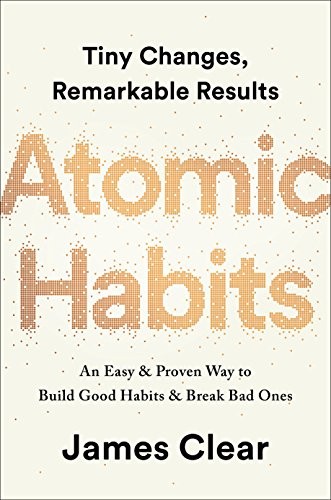
Twenty-five million copies, the publisher says. The most-quoted claim inside them rests on stories, not studies.
01Introduction
Twenty-five million copies, the publisher says. The most-quoted claim inside them rests on stories, not studies.
02Core Idea
The central argument of Atomic Habits is deceptively small. Clear proposes that tiny, almost unnoticeable improvements — the kind you would never celebrate on the day — compound over months and years into dramatic change. The framing he is best known for is the idea of getting one percent better at something, repeatedly, and letting time do the heavy lifting.
From that seed, the book builds two bigger claims. The first is systems over goals. Clear argues that goals set a direction, but the system — the daily process you actually run — is what produces results. In his telling, you do not rise to the level of your goals; you fall to the level of your systems.
The second claim is about identity. Rather than chasing an outcome, Clear suggests that lasting change comes from shifting who you believe you are — becoming, in his words, the type of person who does the habit, so the behaviour follows the self-image rather than fighting it. A running theme is patience: the book argues there is no fixed number of days to build a habit, and that people often quit during what it describes as a plateau, right before the accumulated effort would have started to show.
To make habits practical, Clear organises behaviour into a four-step loop — cue, craving, response, and reward — and then hangs four rules on it. In plain terms: make a good habit obvious, attractive, easy, and satisfying, and make a bad habit invisible, unattractive, difficult, and unsatisfying. Much of the book is a tour of tactics that fit into those four slots — designing your environment so cues are hard to miss, stacking a new habit onto one you already do, and shrinking a behaviour until it is almost too small to fail. Clear also leans on the influence of environment and social circle, arguing that the people around you and the spaces you move through quietly steer what you repeat.
03The Evidence
So what is the case for the book actually working? On its own terms, the evidence Clear offers is mostly illustrative — a large collection of stories chosen to make each principle vivid.
The signature example is British Cycling. Reviewers routinely summarise it the same way: a team with a dismal record hired a performance director who chased what he called the aggregation of marginal gains — dozens of tiny improvements, from bike seats to how riders washed their hands — and the program went on to a run of Olympic and Tour de France success.
Alongside the sport stories sit examples from business and everyday life, plus references to ideas from psychology and neuroscience about how cues and rewards shape repeated behaviour. Supporters point out that many of the tactics are low-cost and testable — you can try habit-stacking or environment design yourself and see whether the friction really changes. That practicality, more than any single study, is what most positive reviewers credit for the book's staying power. Fans also praise the writing itself: short chapters, concrete examples, and a plainness that makes the ideas easy to remember and hard to over-think.
It is worth being clear about what kind of evidence this is. The book leans on curated success stories and accessible summaries of research rather than presenting original experiments. As a review, we note that distinction rather than resolve it — and it becomes the hinge for the criticism that follows in the next chapter.
04The Critiques
Because most popular coverage of this book is glowing, the criticisms are worth giving real airtime. Several recurring lines of critique appear across editorial and expert reviews.
The first is that the book breaks little genuinely new ground. Critics note that Clear synthesises existing behavioural work — the cue-routine-reward habit loop popularised earlier by Charles Duhigg, and the tiny-behaviour models associated with researcher B.J. Fogg — more than he generates new science of his own. On this view, the achievement is packaging and clarity, not discovery — a very readable assembly of ideas that were already circulating in the field.
The second is the reliance on anecdote. Reviewers have pointed out that the memorable examples — the cycling team, a comedian's don't-break-the-chain calendar — are success stories, not controlled evidence. That invites a survivorship-bias problem: we hear about the marginal-gains team that won, but not the many teams that made similar small tweaks and still lost. Some critics argue the compelling narratives do heavier persuasive work than the underlying data can support.
One for the comments: does a winning cycling team prove the method, or only that a winning team also did small things? Say which — the replies on this one are usually split.
The third critique targets the one-percent-compounding metaphor itself. Applying compound interest to human behaviour is, some analysts argue, a conceptual stretch — real habit formation tends to arrive in fits and plateaus rather than a neat exponential curve, so the tidy math flatters the story.
A fourth line pushes back on systems over goals. Some behavioural researchers note that specific, challenging goals are among the most well-supported motivators in the literature, so framing goals as the lesser partner may overcorrect. In practice, critics say, the two work together rather than competing.
Finally, several reviewers flag who the book quietly leaves out. The advice assumes a fairly typical, unobstructed reader, and critics note it says little about serious barriers — clinical depression, ADHD, addiction, or systemic disadvantage — where willpower and habit-stacking are not the binding constraint. A number of readers also find the book repetitive, its handful of ideas restated many times over. Related to that, some medical and health writers argue a few of the confident claims run ahead of the evidence — for example, treating small behavioural gains as if they reliably compound in every person, when consistency itself is shaped by factors the book barely touches, from sleep and stress to hormonal cycles. The pattern critics describe is less a book that is wrong and more a book that is over-certain.
The sharpest version of that objection comes from reviewers writing about attention and executive function. Their argument is not that the advice is wrong but that it assumes a reader whose follow-through is already reliable. Habit-stacking and cue design lean on remembering the cue and initiating the action, and for readers with executive-function difficulties those are the steps that are hard. One ADHD coach's review argues the result is not neutral: a reader who tries beautifully simple ideas and cannot sustain them tends to read the failure as a personal one, so the calendar of broken chains becomes a record of guilt rather than a tool. Reviewers in this area suggest the ideas still have use, but need a different starting point — designing the environment around how attention actually behaves, rather than around willpower.
None of this makes the book worthless in critics' eyes — most concede it is clear, motivating, and usable. The recurring verdict is narrower: that it is a well-packaged synthesis oversold as science.
05Who It's For
So where does that leave a prospective reader? Based on both its fans and its critics, Atomic Habits reads as an entry-level, practical handbook. It is aimed at a general audience who want a plain-language system for everyday behaviours — showing up at the gym, reading more, chipping away at procrastination.
Readers who value concrete tactics and a light, repeatable framework tend to get the most from it, particularly those at the start of a change who want structure rather than theory. Those looking for deep neuroscience, primary research, or the citations behind each claim are the ones most likely to come away underwhelmed, and reviewers often point them toward more academic treatments of habit. And as several critics stress, anyone dealing with a clinical condition or a genuinely stubborn behaviour is exactly the reader the book's simplest advice serves least well.
06Offshoots
Beyond the text, a few facts of reach and afterlife. Atomic Habits was published in October 2018 by Avery, an imprint of Penguin Random House.
Its commercial run is unusual. The publisher reports the book spent about two hundred and sixty weeks — roughly five years — on the New York Times bestseller list, and marketed it as a number-one bestseller at its five-year anniversary.
On sales, figures vary by source. The publisher-reported total is over twenty-five million copies worldwide as of 2024, though other references have cited a lower figure of nearly twenty million around early that year — a gap worth noting rather than smoothing over. The book has also been translated, by the publisher's count, into more than sixty languages.
There is a modest ecosystem around it. In 2019 a companion Clear Habit Journal was released to put the book's ideas into a physical notebook. The 2023 reissue cover later won a Penguin cover design award. And in the wider culture, one outlet went as far as calling it the self-help book of the decade. As of this review, there is no film or television adaptation.
07Verdict
Weighed on its own terms, here is how the book scores across five dimensions.
On clarity and everyday usefulness it rates strongly. On originality and rigour it is more mixed — a well-packaged synthesis rather than new science. On inclusiveness it is thin, saying little for readers whose barriers run deeper than willpower.
The balanced verdict: a clear, genuinely useful handbook whose confident science is oversold — strong where it is practical, weaker where it claims to be proven.
The figures, then. Twenty-five million copies by the publisher's count, two hundred and sixty weeks on the bestseller list, and the evidence behind the method is stories — a cycling team, a comedian's calendar — with the research underneath borrowed from Duhigg and Fogg.
Read this if you want a plain system for everyday habits and a book you will actually finish. Skip it if you need primary research, or if your barrier is clinical rather than a matter of routine.
That is Atomic Habits — a clear, widely loved handbook of small-habit tactics, and, by its critics' account, a synthesis often mistaken for original science.
Where to find the book
Amazon UKAmazon IndiaAs an Amazon Associate we may earn from qualifying purchases. Using these links costs you nothing and helps the channel.
Questions
What is Atomic Habits about?
Twenty-five million copies, the publisher says. The most-quoted claim inside them rests on stories, not studies.
What do critics say about Atomic Habits?
Because most popular coverage of this book is glowing, the criticisms are worth giving real airtime. Several recurring lines of critique appear across editorial and expert reviews.
Who is Atomic Habits for?
So where does that leave a prospective reader? Based on both its fans and its critics, Atomic Habits reads as an entry-level, practical handbook. It is aimed at a general audience who want a plain-language system for everyday behaviours — showing up at the gym, reading more, chipping away at procrastination.